
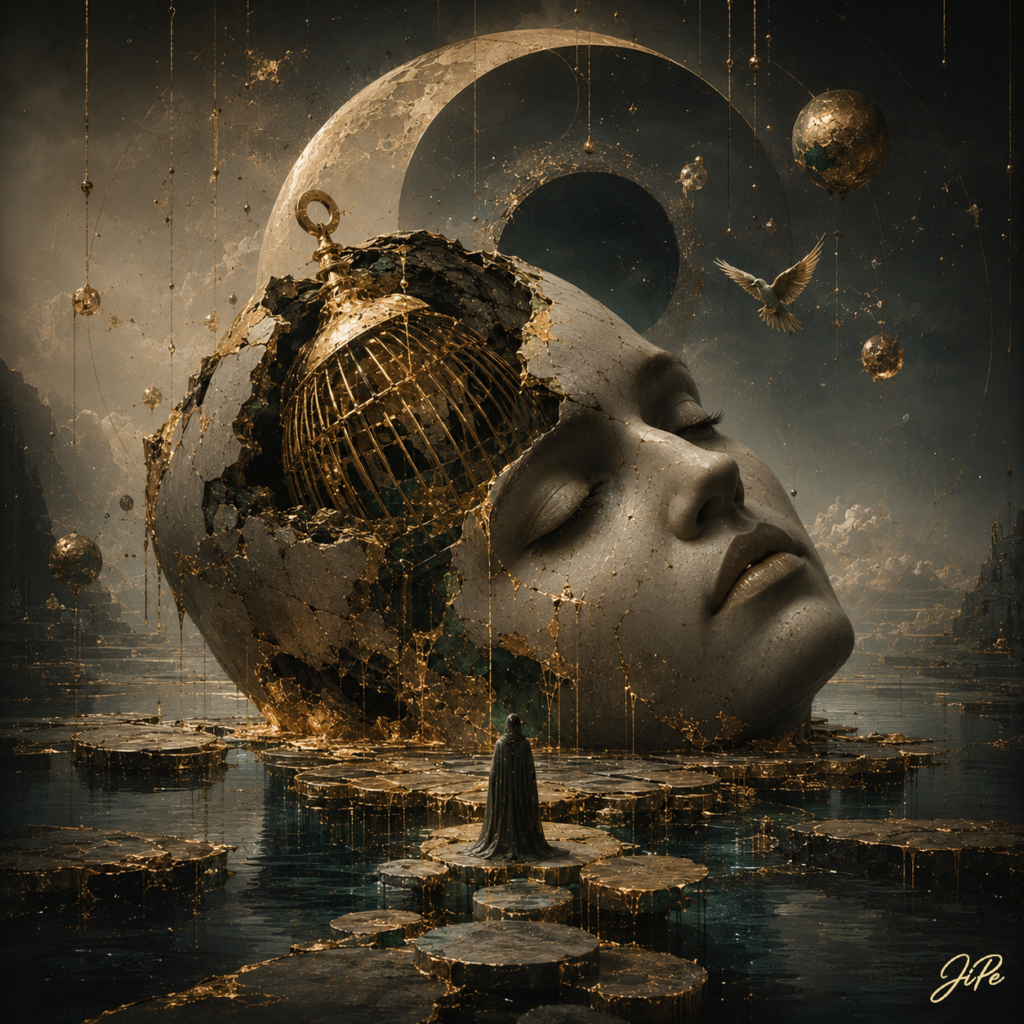
The Cage Within the Dream occupies the uneasy territory between surrender and confinement. A vast, silent presence dominates the space, yet its stillness feels neither peaceful nor final. Something remains unresolved beneath the surface—a private architecture concealed within consciousness, protected and imprisoned by the same boundaries.
The surrounding darkness gives the work an almost suspended gravity. Light arrives sparingly, gathering along fractures and edges as though searching for passages into what has been sealed away. Against this immensity, the solitary human presence becomes a measure of psychological distance: close enough to witness, too small to comprehend. The tension lies not simply between freedom and captivity, but between what the mind reveals and what it must keep inaccessible.
The title shifts this tension inward. If the dream contains a cage, it remains uncertain whether something is trapped inside it or whether the cage itself is being protected from release. The distinction between dreamer and dreamed begins to dissolve.
What remains is a disturbing possibility: perhaps the deepest chambers of the self are not locked because we cannot enter them, but because some part of us has chosen to keep the door closed.