Ronaldo
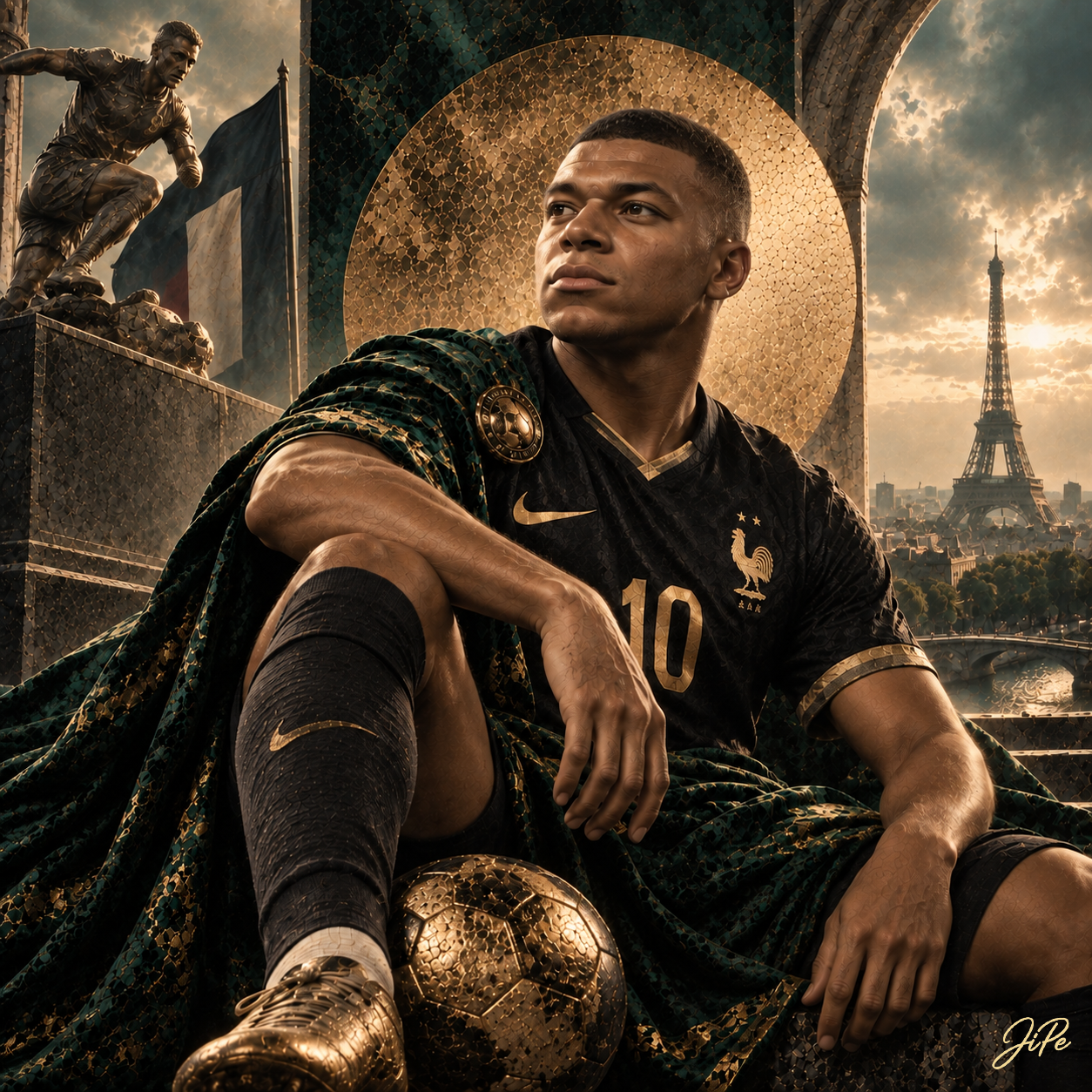
In Ronaldo, the exhilaration of victory gives way to a more contemplative encounter with greatness. The central figure stands between the immediacy of human experience…


Monumental Art creates a powerful sense of scale, presence, and visual impact. It can make figures, landscapes, architecture, and symbols feel larger than life.
However, monumental art is not defined only by physical size. An artwork can also become monumental through composition, perspective, light, atmosphere, and subject.
This collection explores that visual language through contemporary fine art. Dramatic scenes combine realism, symbolism, mythology, and imaginative storytelling.
Monumental artworks are designed to command attention. Strong focal points and carefully structured compositions give each image a distinctive presence.
Human figures may appear beside enormous structures or vast landscapes. In contrast, solitary subjects can seem small against mountains, skies, temples, or mysterious forms.
This relationship between human scale and monumental surroundings creates tension. It can also evoke wonder, solitude, power, or contemplation.
As a result, scale becomes part of the story.
The human figure plays an important role in many Monumental Art compositions. Portraits and figures can gain an almost sculptural presence through dramatic scale.
Elsewhere, the landscape becomes the dominant force. Mountains, cliffs, ruins, oceans, and vast skies create environments that seem to extend beyond the image.
Architecture can strengthen this effect. Massive gateways, temples, stairways, and ancient structures suggest worlds shaped by history and mystery.
Meanwhile, distant figures provide a sense of proportion. Their presence allows viewers to experience the immense scale of the surrounding world.
Light is essential for creating visual monumentality. Strong illumination can separate important forms from darkness and guide the viewer through the composition.
Deep shadows add weight and depth. Moreover, atmospheric light can make distant spaces appear almost infinite.
Perspective creates another layer of scale. Foreground elements may feel close and imposing, while distant forms disappear into mist or light.
Together, these techniques create a powerful illusion of space.
Texture also contributes to the experience. Weathered stone, fractured surfaces, expressive brushwork, and layered details can make objects feel ancient and physical.
Contemporary Monumental Art often combines scale with symbolic meaning. Large forms become more than impressive visual elements.
A monumental doorway can represent transition. Similarly, a vast staircase may suggest ascent, struggle, discovery, or transformation.
Celestial spheres can evoke eternity and the unknown. Ancient ruins may represent memory, time, lost civilizations, or the fragile nature of human achievement.
Therefore, scale can strengthen the symbolic meaning of an artwork.
The viewer does not simply observe the scene. Instead, the composition creates the feeling of standing within it.
Many monumental artworks move between realism and surrealism. Recognizable figures and landscapes may exist beside impossible structures or mysterious phenomena.
This contrast creates a world that feels believable yet extraordinary. Consequently, familiar subjects gain a sense of myth and timelessness.
Mythological themes can deepen that effect. Warriors, guardians, sacred spaces, celestial forms, and ancient symbols connect contemporary images with timeless stories.
Yet every work remains open to interpretation.
This collection of Monumental Art explores scale, symbolism, mythology, nature, transformation, and humanity’s relationship with forces greater than ourselves.
Some artworks create awe through vast landscapes. Others achieve monumentality through powerful figures, dramatic light, or commanding symbolic forms.
Throughout the collection, composition plays a central role. Every element contributes to depth, visual hierarchy, and atmosphere.
Ultimately, Monumental Art transforms scale into emotion. It invites the viewer to encounter images that feel powerful, timeless, and larger than ordinary experience.
Explore this collection of contemporary Monumental Art and discover worlds shaped by dramatic scale, symbolism, atmosphere, and visual storytelling.