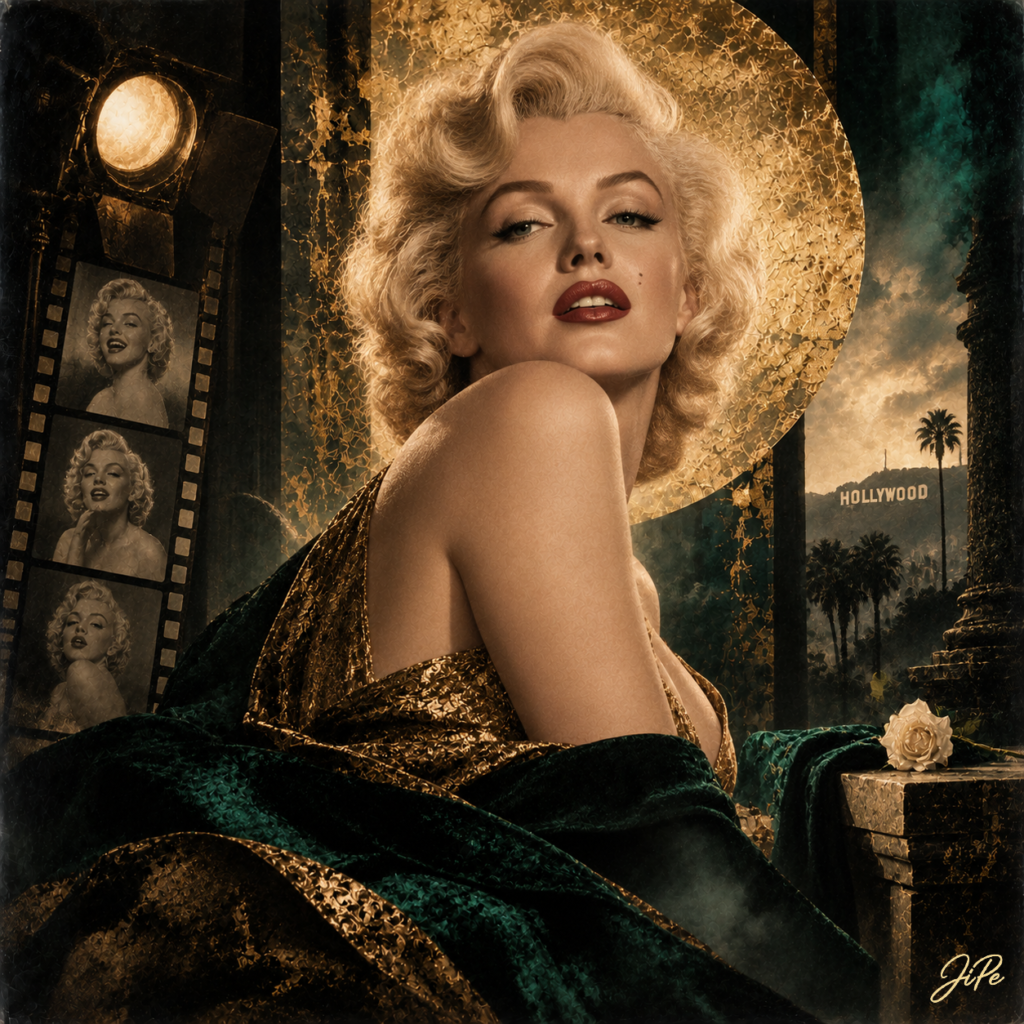
Marilyn Monroe exists in the charged space between a private human presence and an image consumed by the world. Few faces became as inseparable from twentieth-century celebrity as Monroe’s; actress, star and enduring cultural icon, she came to embody Hollywood glamour while her public image continued to expand far beyond the boundaries of her own life.
Within the work, that fame acquires an almost monumental scale. Light does more than illuminate: it isolates, elevates and exposes. The surrounding darkness seems to hold the figure between intimacy and spectacle, while echoes of the cinematic image suggest the multiplication through which a person becomes endlessly reproducible. Monroe appears simultaneously immediate and unreachable—both woman and apparition.
There is tension in this permanence. Celebrity promises a form of immortality, yet the image that survives can gradually eclipse the individual from whom it originated. Beauty, desire and recognition remain present, but so do distance and silence. The title, Marilyn Monroe, carries the extraordinary weight of a name that has become larger than biography.
What, then, survives within an icon after millions of eyes have looked upon her—and where, behind the enduring image, does the person remain?